5G Network Expansion in Oman: The Future of Mobile Connectivity
Discover how 5G technology is transforming mobile connectivity across Oman, from Muscat to Salalah, and learn what this means for your mobile experience
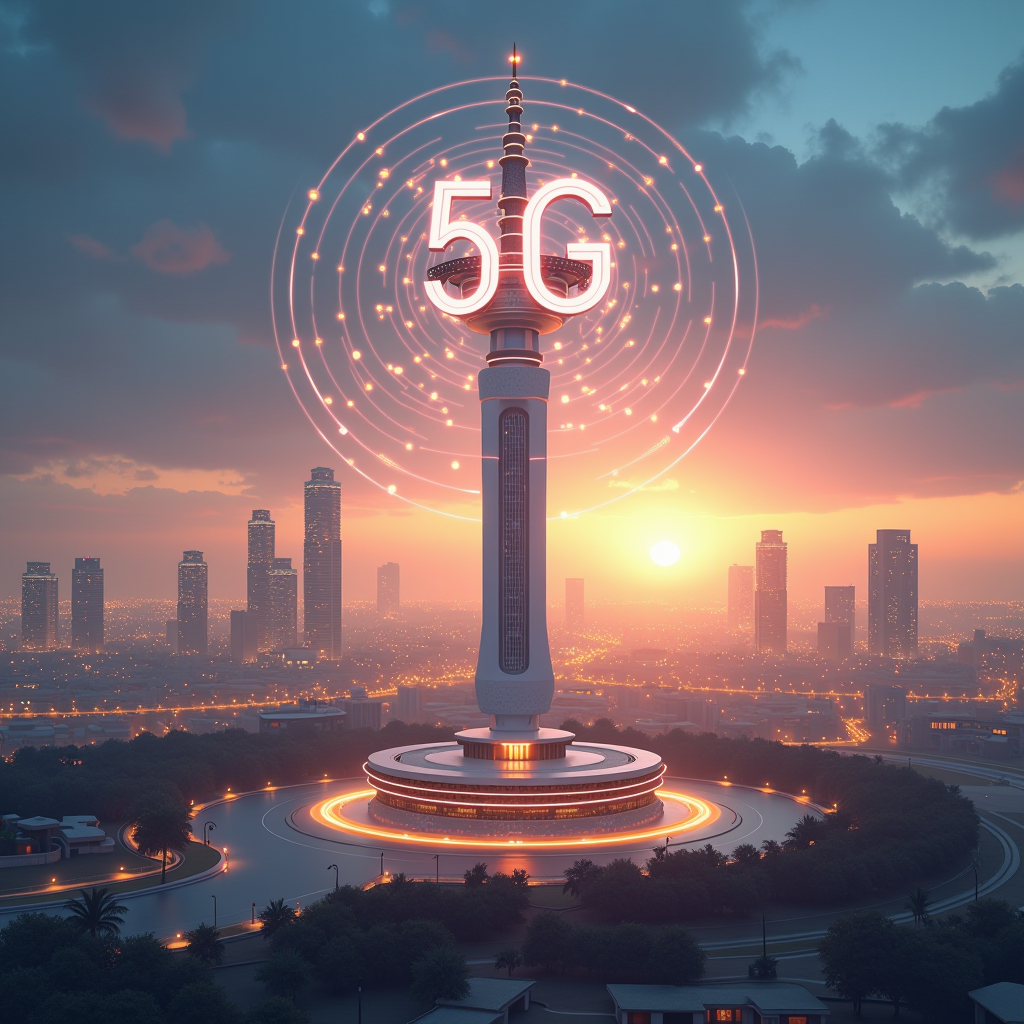
The telecommunications landscape in Oman is undergoing a revolutionary transformation with the rapid expansion of 5G networks across the Sultanate. As one of the Gulf region's most forward-thinking nations in terms of digital infrastructure, Oman has embraced fifth-generation wireless technology with remarkable enthusiasm, positioning itself at the forefront of the Middle East's digital revolution. This comprehensive exploration delves into the current state of 5G deployment, its availability in major urban centers, compatible devices, and how this next-generation technology is reshaping mobile plans and user experiences throughout the country.
From the bustling streets of Muscat to the historic landscapes of Salalah, 5G technology is not just a buzzword—it's becoming an integral part of daily life for Omani residents and businesses alike. Understanding this technology and its implications is crucial for anyone looking to maximize their mobile connectivity experience in modern Oman.
Understanding 5G Technology: What Makes It Revolutionary
Fifth-generation wireless technology represents a quantum leap forward from its 4G predecessor, offering unprecedented speeds, dramatically reduced latency, and the capacity to connect exponentially more devices simultaneously. While 4G networks transformed how we consume content on mobile devices, 5G is poised to revolutionize entire industries, from healthcare and education to transportation and entertainment.
The technical specifications of 5G are impressive: theoretical download speeds can reach up to 20 Gbps, though real-world speeds typically range from 100 Mbps to 1 Gbps depending on network conditions and location. Latency—the time it takes for data to travel from source to destination—drops to as low as 1 millisecond, compared to 4G's 30-50 milliseconds. This near-instantaneous response time opens doors to applications that were previously impossible, such as real-time remote surgery, autonomous vehicle coordination, and immersive augmented reality experiences.
For everyday users in Oman, 5G translates to seamless video streaming in 4K or even 8K resolution, lightning-fast app downloads, buffer-free video calls, and the ability to work remotely with the same efficiency as being in the office. The technology utilizes higher frequency bands, including millimeter waves, which can carry more data but have shorter range, necessitating a denser network of smaller cell sites—a challenge that Omani telecom providers have been actively addressing.
The architecture of 5G networks also differs fundamentally from previous generations. Network slicing allows operators to create multiple virtual networks on a single physical infrastructure, each optimized for specific use cases. This means a hospital could have a dedicated slice for critical medical applications, while entertainment services run on a separate slice, ensuring that urgent communications never compete with recreational traffic for bandwidth.
5G Network Coverage Across Oman: Current Deployment Status
The rollout of 5G infrastructure across Oman has been strategic and progressive, with major telecommunications providers focusing initially on high-density urban areas before expanding to secondary cities and eventually rural regions. As of early 2026, the coverage map tells a story of rapid advancement and ambitious expansion plans that promise to make Oman one of the most connected nations in the region.
Muscat: The 5G Pioneer
Muscat, as Oman's capital and largest metropolitan area, naturally became the first city to receive comprehensive 5G coverage. The deployment began in late 2024 in key commercial districts such as Al Khuwair, Qurum, and the Central Business District, where the concentration of businesses and tech-savvy consumers created immediate demand for next-generation connectivity. Today, virtually all of Muscat's urban core enjoys robust 5G coverage, with signals extending to residential neighborhoods in Al Hail, Al Mawaleh, and Azaiba.
The coverage extends beyond the city center to include Muscat International Airport, ensuring that travelers experience cutting-edge connectivity from the moment they arrive. Major shopping destinations like Muscat Grand Mall, Oman Avenues Mall, and City Centre Muscat all boast excellent 5G reception, allowing shoppers to enjoy seamless mobile experiences while browsing, comparing prices, or sharing their experiences on social media in real-time.
Educational institutions have also been prioritized in the rollout, with Sultan Qaboos University and other major campuses receiving early 5G access. This strategic decision supports Oman's vision of becoming a knowledge-based economy, enabling students and researchers to leverage advanced technologies like cloud computing, virtual laboratories, and collaborative international research projects without connectivity constraints.
Salalah: Bringing 5G to the South
Salalah, Oman's second-largest city and the capital of Dhofar Governorate, represents a significant milestone in the nationwide 5G expansion. The city's strategic importance as a tourism hub, particularly during the Khareef season, made it a priority for early 5G deployment. Coverage in Salalah began rolling out in mid-2024, focusing initially on the city center, major hotels along the coastline, and popular tourist attractions such as Al Baleed Archaeological Park and the Salalah Gardens Mall.
The Port of Salalah, one of the region's most important maritime facilities, has been equipped with comprehensive 5G coverage to support smart port operations, including automated cargo handling, real-time tracking systems, and enhanced security protocols. This infrastructure investment positions Salalah as a technologically advanced logistics hub capable of competing with the world's most modern ports.
Residential areas in Salalah are experiencing phased 5G deployment, with neighborhoods like Al Dahariz, Al Husn, and Al Saada receiving coverage throughout 2025 and early 2026. The expansion continues to progress steadily, with telecom providers committed to achieving near-complete urban coverage by the end of 2026.
Other Major Cities and Future Expansion
Beyond Muscat and Salalah, several other Omani cities have begun receiving 5G coverage as part of the national digital transformation strategy. Sohar, with its industrial significance and growing population, has seen 5G deployment in its port area and central business districts. The city's role as an industrial powerhouse makes it an ideal testbed for industrial IoT applications that rely on 5G's low latency and high reliability.
Sur, known for its maritime heritage and growing tourism sector, has received initial 5G coverage in its downtown area and along the corniche. Nizwa, the historic capital and a major tourist destination, is scheduled for comprehensive 5G deployment throughout 2026, with particular emphasis on the souq area and major hotels to enhance the visitor experience.
The long-term vision includes extending 5G coverage along major highways connecting these cities, ensuring that travelers enjoy uninterrupted high-speed connectivity during their journeys. Rural areas and smaller towns are expected to receive 5G coverage in phases extending through 2027 and beyond, though 4G networks will continue to provide reliable service in these regions during the transition period.
5G-Compatible Devices: What You Need to Know
Accessing 5G networks requires compatible hardware, and the good news for Omani consumers is that the market has rapidly evolved to offer a wide range of 5G-enabled devices across various price points. Understanding device compatibility and making informed purchasing decisions is crucial for anyone looking to take full advantage of the 5G infrastructure being deployed across the country.
Flagship Smartphones Leading the Way
Premium smartphone manufacturers were quick to embrace 5G technology, and today's flagship devices from brands like Apple, Samsung, Huawei, and Xiaomi all come standard with 5G capability. The iPhone 15 series, Samsung Galaxy S24 lineup, and Huawei Mate 60 series represent the cutting edge of 5G smartphone technology, offering not just network compatibility but also optimized antennas and modems that maximize the benefits of 5G connectivity.
These devices typically support multiple 5G bands, including both sub-6 GHz frequencies (which offer better coverage and building penetration) and mmWave bands (which provide the highest speeds in dense urban areas). For Omani users, this multi-band support ensures compatibility with the diverse 5G infrastructure being deployed by different operators across various regions.
Mid-Range Options Bringing 5G to the Masses
Perhaps more significantly for widespread 5G adoption, mid-range smartphones have increasingly incorporated 5G capability without commanding premium prices. Devices from brands like OnePlus, Realme, OPPO, and Vivo offer 5G connectivity at price points accessible to a broader segment of the Omani population. Models such as the OnePlus Nord series, Realme GT series, and Samsung Galaxy A series provide excellent 5G performance while keeping costs reasonable.
These mid-range devices typically support the most commonly deployed 5G bands in Oman, ensuring that users can enjoy enhanced speeds and reduced latency without investing in top-tier flagship models. For many consumers, these devices represent the sweet spot of value and performance, offering 90% of the 5G experience at 50-60% of the flagship price.
Beyond Smartphones: Tablets, Laptops, and IoT Devices
The 5G ecosystem extends far beyond smartphones. Tablets like the iPad Pro with 5G capability and Samsung Galaxy Tab S9 series offer mobile professionals the ability to work from anywhere with desktop-class connectivity. These devices are particularly valuable for business users who need to access cloud applications, participate in video conferences, or transfer large files while on the move.
5G-enabled laptops are also entering the market, with models from manufacturers like Lenovo, HP, and Dell incorporating 5G modems directly into their designs. This integration eliminates the need for separate mobile hotspots or tethering to smartphones, providing seamless always-connected computing experiences ideal for remote workers and digital nomads.
Home internet solutions leveraging 5G technology are becoming increasingly popular in Oman, particularly in areas where traditional fiber-optic infrastructure is limited. 5G home routers from providers like Huawei and ZTE can deliver broadband-equivalent speeds wirelessly, offering a compelling alternative to fixed-line internet services. These devices are particularly valuable for renters or those in newly developed areas where wired infrastructure may not yet be available.
Checking Device Compatibility
Before purchasing a 5G device, Omani consumers should verify that it supports the specific frequency bands deployed by their chosen mobile operator. Most modern 5G devices sold in Oman are configured to work with local networks, but imported devices or models purchased abroad may have limited band support. Checking with your mobile provider or consulting the device manufacturer's specifications can prevent compatibility issues and ensure you get the full benefit of your 5G investment.
5G Mobile Plans: Pricing, Performance, and Value Proposition
The introduction of 5G technology has prompted Omani mobile operators to restructure their plan offerings, creating new tiers that cater to different usage patterns and budget considerations. Understanding how 5G plans differ from their 4G counterparts—in terms of pricing, data allowances, and performance characteristics—is essential for making informed decisions about mobile service.
Pricing Structure and Premium Positioning
When 5G services first launched in Oman, they commanded a significant premium over 4G plans, reflecting the substantial infrastructure investments required for deployment. However, as the technology has matured and competition among providers has intensified, the price gap has narrowed considerably. As of early 2026, 5G plans typically cost 15-25% more than equivalent 4G plans, a premium that many users find justified by the performance improvements.
Entry-level 5G plans generally start around 15-18 OMR per month, offering 50-75 GB of high-speed data with unlimited calling and messaging. Mid-tier plans, priced between 25-35 OMR monthly, typically provide 150-200 GB of data along with additional perks such as streaming service subscriptions or international calling minutes. Premium unlimited plans can range from 45-60 OMR per month, offering truly unlimited data (though some may implement speed throttling after very high usage thresholds) plus comprehensive entertainment bundles.
Performance Differences: Speed and Latency
The performance differential between 5G and 4G plans is substantial and immediately noticeable in real-world usage. While 4G networks in Oman typically deliver download speeds of 20-50 Mbps in good conditions, 5G connections routinely achieve 200-500 Mbps, with peak speeds exceeding 1 Gbps in optimal locations. This means downloading a full HD movie that might take 10-15 minutes on 4G can be completed in under a minute on 5G.
Upload speeds show even more dramatic improvements, with 5G offering 50-200 Mbps compared to 4G's typical 5-20 Mbps. This enhancement is particularly valuable for content creators, business users conducting video conferences, or anyone who regularly shares large files or high-resolution photos and videos. The ability to upload a 4K video to social media or cloud storage in seconds rather than minutes fundamentally changes how users interact with their mobile devices.
Latency improvements are equally impressive, with 5G connections achieving response times of 10-20 milliseconds compared to 4G's 30-50 milliseconds. While this difference might seem small numerically, it has profound implications for interactive applications. Online gaming becomes more responsive, video calls feel more natural with reduced lag, and emerging applications like augmented reality function smoothly without the disorienting delays that plague 4G connections.
Data Allowances and Fair Usage Policies
An interesting trend in 5G plan design is the shift toward more generous data allowances. Recognizing that 5G's superior speeds encourage higher data consumption—users are more likely to stream in 4K, download large files, or use bandwidth-intensive applications—operators have increased data caps accordingly. Where a premium 4G plan might offer 100 GB monthly, an equivalent 5G plan typically provides 150-200 GB or more.
Some operators have introduced truly unlimited 5G plans, though these often come with fair usage policies that may reduce speeds after consuming 300-500 GB in a single billing cycle. These policies are designed to prevent network abuse while still providing effectively unlimited service for typical users. For most consumers, even heavy users, these thresholds are high enough that they'll never encounter speed restrictions.
Value-Added Services and Bundled Benefits
To differentiate their 5G offerings and justify premium pricing, Omani mobile operators have begun bundling various value-added services with their plans. These might include subscriptions to streaming platforms like Netflix, Spotify, or regional services like Shahid, cloud storage allocations, or priority customer support. Some plans offer gaming-specific benefits such as reduced latency routing for popular online games or partnerships with gaming platforms.
Business-oriented 5G plans often include additional features like static IP addresses, enhanced security services, or dedicated account management. These professional-grade services recognize that 5G is not just a consumer technology but a critical business tool that enables new ways of working and serving customers.
Comparing 4G and 5G: Is the Upgrade Worth It?
For users deciding between 4G and 5G plans, the value proposition depends on individual usage patterns and priorities. Heavy data users who regularly stream video, download large files, or use their mobile connection as a primary internet source will find 5G's speed and capacity improvements well worth the premium. The ability to use mobile data as a genuine broadband replacement becomes realistic with 5G in ways it never was with 4G.
The Future of 5G in Oman: What Lies Ahead
As 5G infrastructure continues to expand across Oman, the technology's impact will extend far beyond faster smartphone connections. The true transformative potential of 5G lies in its ability to enable entirely new categories of applications and services that were previously impossible or impractical with earlier network generations.
Smart city initiatives in Muscat and other major urban centers will leverage 5G connectivity to implement intelligent traffic management systems, environmental monitoring networks, and public safety enhancements. Imagine traffic lights that adapt in real-time to traffic flow, waste management systems that optimize collection routes based on actual fill levels, or emergency services that can access live video feeds and building information during crisis response.
The healthcare sector stands to benefit enormously from 5G deployment. Telemedicine services will become more sophisticated, with high-definition video consultations and remote patient monitoring becoming standard practice. In rural areas where specialist medical care may be hours away, 5G-enabled diagnostic equipment could allow local clinics to transmit detailed medical imaging to specialists in Muscat for immediate consultation, potentially saving lives through faster diagnosis and treatment.
Education will also be transformed, with 5G enabling immersive virtual and augmented reality learning experiences. Students in Salalah could take virtual field trips to historical sites in Nizwa, or engineering students could manipulate complex 3D models in real-time collaborative sessions with peers across the country. The technology makes distance learning genuinely comparable to in-person instruction in ways that previous generations of connectivity could not achieve.
Industrial applications of 5G are already emerging in Oman's ports and manufacturing facilities. Automated guided vehicles in warehouses, predictive maintenance systems in factories, and real-time supply chain tracking all benefit from 5G's combination of high bandwidth, low latency, and massive device connectivity. These applications promise to enhance Oman's economic competitiveness and support the country's diversification goals.
Looking further ahead, the evolution toward 5G Advanced and eventually 6G technologies is already being planned. These future iterations will build upon the foundation being laid today, offering even greater capabilities and enabling applications we can barely imagine. For Oman, maintaining its position at the forefront of telecommunications technology will be crucial for economic development and quality of life in the decades to come.
Conclusion: Embracing Oman's 5G Future
The expansion of 5G networks across Oman represents more than just an incremental upgrade in mobile technology—it's a fundamental transformation in how we connect, communicate, and conduct our daily lives. From the comprehensive coverage in Muscat to the growing availability in Salalah and other major cities, 5G infrastructure is rapidly becoming accessible to a majority of Omani residents.
The wide range of compatible devices now available, from premium flagships to affordable mid-range options, ensures that 5G technology is not limited to early adopters or tech enthusiasts. As prices continue to moderate and coverage expands, 5G will become the standard rather than the exception for mobile connectivity in Oman.
While 5G plans currently command a premium over 4G offerings, the performance improvements—dramatically faster speeds, reduced latency, and enhanced reliability—provide tangible value that justifies the additional cost for many users. As competition intensifies and infrastructure costs are amortized, we can expect pricing to become even more competitive, making 5G accessible to an ever-broader segment of the population. For anyone looking to future-proof their mobile connectivity and take advantage of the latest technological capabilities, now is an excellent time to explore 5G options and join Oman's digital revolution.